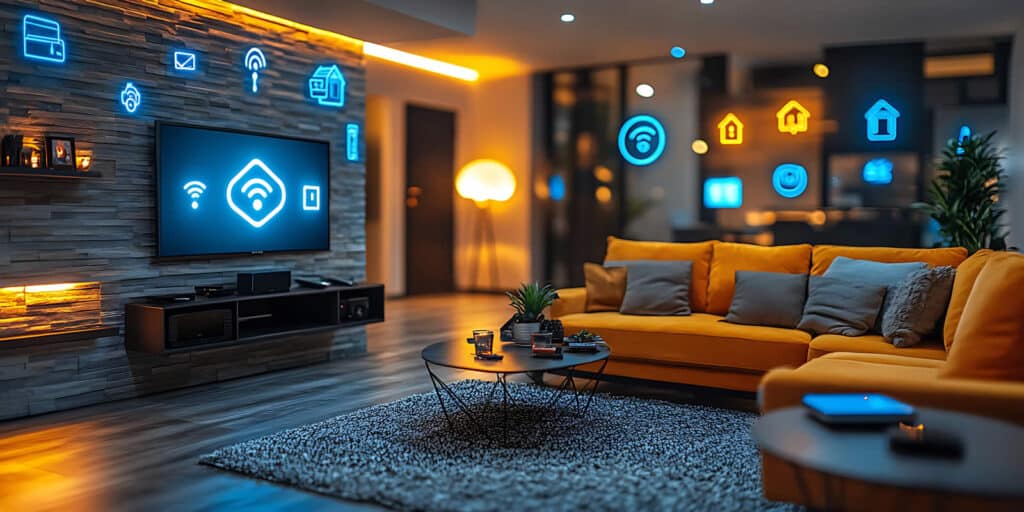

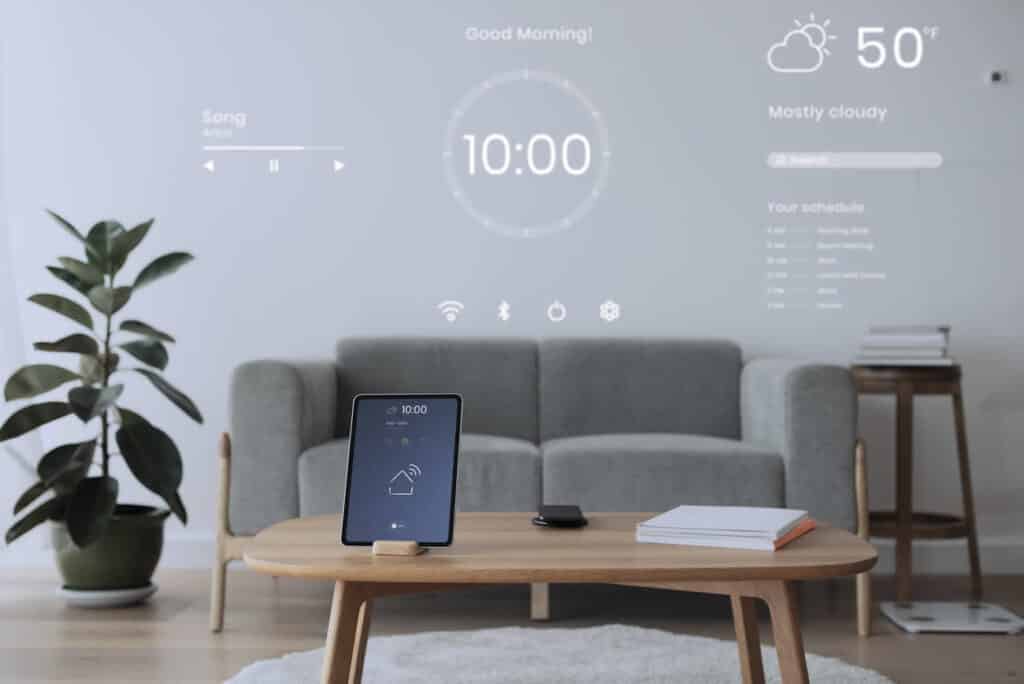
A modern home no longer relies on isolated gadgets that work independently. A true smart home connects lighting, security, connectivity, entertainment and automation into one reliable system that works together naturally. When designed properly, smart technology simplifies daily life, improves safety, reduces energy waste and gives you control wherever you are.
Many homeowners start with a few devices such as a smart speaker or camera, then quickly discover problems with poor WiFi coverage, multiple apps, unreliable alerts and systems that do not integrate properly. The result is often frustration rather than convenience. Creating a genuinely smart home requires planning, structure and a clear understanding of how different technologies interact.
We walk you through how to turn your property into a fully connected smart home, focusing on reliability, security, scalability and everyday usability rather than gimmicks or short-term trends. The goal is not to buy the most devices, but to create a system that quietly supports your lifestyle without constant maintenance or troubleshooting.
Understanding What a Smart Home Really Is
A smart home is not defined by the number of devices installed. It is defined by how well those devices communicate, respond and support your lifestyle. Lighting should respond automatically to movement or time of day. Security systems should integrate cameras, alarms and lighting into a unified response. Heating should adjust intelligently based on occupancy and routines. Your network should support everything without slowdowns or outages.
The foundation of a smart home is connectivity. Every device relies on a stable network, secure configuration and consistent performance. Without this foundation, even the most advanced equipment becomes unreliable. Delays in alerts, dropped camera feeds or unresponsive automation quickly undermine trust in the system.
Equally important is usability. A smart home should simplify decisions rather than create new ones. A single app or dashboard should control the majority of systems, reducing the need to switch between platforms. Automation should remove repetitive tasks rather than add complexity. If technology creates friction, it stops delivering value.
A well-designed smart home behaves predictably. Systems respond consistently, notifications are meaningful rather than noisy, and maintenance requirements are minimal. This reliability allows homeowners to enjoy the benefits of automation without feeling overwhelmed by technology.
Start with Your Network and Connectivity
Your network is the backbone of your smart home. Before adding devices, assess WiFi coverage, signal strength and bandwidth availability. Dead zones, interference and outdated routers will cause slow response times, dropped connections and unreliable automation.
Mesh networking systems distribute coverage evenly across the property, eliminating weak areas and ensuring consistent signal strength for cameras, sensors and smart devices. Larger homes, multi-storey layouts and properties with thick walls benefit particularly from intelligent access point placement.
Wired connections should be used where possible for fixed equipment such as network switches, recording devices and access points. Wired infrastructure delivers stability, reduces wireless congestion and improves long-term reliability.
Network security is essential. Strong passwords, segmented networks for smart devices, and regular firmware updates reduce vulnerability. Firewalls and secure configuration protect against unauthorised access while maintaining performance.
Capacity planning is equally important. Streaming cameras, cloud backups, voice assistants and automation traffic all compete for bandwidth. A properly designed network anticipates growth so new devices can be added without slowing the entire system.
Plan Your Smart Home Goals
Every household uses technology differently. Some prioritise security and monitoring, while others focus on comfort, convenience, entertainment or energy efficiency. Clarifying your priorities helps determine which systems should be implemented first and where investment delivers the greatest value.
Consider how you want your home to behave throughout the day. Morning routines may involve gradual lighting increases, heating adjustments and news updates. Evening routines may focus on security arming, lighting ambience and media control. Travel routines may trigger remote monitoring, automated lighting and alert escalation.
Think about who will use the system. Children, elderly family members and guests may require simplified controls or restricted permissions. Accessibility considerations improve usability for everyone.
Future expansion should always be considered. Choosing platforms that support additional devices prevents costly replacements later. Flexibility protects your investment and allows the system to evolve alongside your lifestyle.
Build Your Smart Security Foundation
Security is often the first major upgrade in a smart home because it delivers immediate peace of mind. Cameras provide visibility, alarms detect intrusion and lighting acts as both deterrent and safety enhancement.
Camera placement should cover entry points, driveways, side access routes and vulnerable areas while respecting privacy boundaries. Resolution selection should match identification needs rather than purely visual preferences. Wide-angle cameras offer coverage while narrower lenses deliver clarity for recognition.
Storage retention should align with personal needs and legal considerations. Cloud and local storage options each provide different benefits depending on accessibility, privacy and resilience requirements.
Alarm systems benefit from zoning flexibility, allowing partial arming and night modes that maintain comfort while preserving protection. Wireless reliability, battery management and signal integrity are critical for long-term dependability.
Lighting schedules create realistic occupancy patterns when away. Motion lighting improves safety around entrances, pathways and garages. Integration between lighting, cameras and alarms creates layered security rather than isolated responses.
Environmental sensors such as smoke, flood and temperature monitoring further enhance protection and early warning capabilities.
Centralise Control with a Unified App
A fragmented system creates confusion and maintenance issues. Multiple apps increase complexity and reduce visibility across the system. A unified control platform allows cameras, alarms, lighting, networking and automation to operate together.
Centralised dashboards improve situational awareness. Alerts can be prioritised and filtered. Automation becomes more powerful when systems interact naturally rather than operating in isolation.
User permissions protect privacy while allowing household members appropriate access. Temporary permissions can be assigned for visitors or contractors. Remote access ensures visibility and control regardless of location.
Consistency across platforms reduces learning curves and minimises support issues. When everything behaves predictably, trust in the system grows.
Automate Everyday Tasks
Automation removes repetitive actions and improves consistency. Morning routines can gradually increase lighting, adjust heating and open blinds. Evening routines can arm security systems, dim lighting and activate perimeter monitoring.
Geofencing allows systems to respond automatically as occupants arrive or leave. Doors can unlock, lights activate and heating adjusts without manual input. Similarly, systems can secure the property automatically when everyone leaves.
Context-aware automation avoids unnecessary triggers. Motion detection at night behaves differently than during the day. Notifications adjust based on occupancy status.
Simple automation delivers the greatest benefit when designed around lifestyle rather than novelty. Over-complication increases failure risk and reduces usability.
Improve Energy Efficiency
Smart thermostats regulate heating based on occupancy patterns, external temperatures and schedules. Lighting automation reduces unnecessary usage. Smart plugs monitor energy consumption and allow scheduled shutdown of idle devices.
Usage data highlights inefficiencies and opportunities for optimisation. Small adjustments compound into meaningful savings over time.
Energy-efficient automation supports sustainability goals while reducing operational costs.
Enhance Comfort and Lifestyle
Smart homes improve comfort beyond security and energy savings. Audio systems can synchronise across rooms. Lighting ambience adjusts to activities. Climate control maintains consistent comfort.
Entertainment systems integrate with voice control and automation for seamless operation. Curtains and blinds respond to sunlight and temperature. Accessibility features simplify daily tasks.
The goal is subtle enhancement rather than constant interaction.
Prioritise Reliability and Maintenance
Firmware updates, battery monitoring and periodic testing maintain performance. Reliable mounting, weatherproofing and cable management prevent long-term degradation.
Routine health checks identify issues before failures occur. Documentation simplifies troubleshooting and future upgrades.
Professional smart home installation reduces hidden risks that DIY installations often overlook.
Security and Privacy Considerations
Smart homes generate data. Secure configuration protects personal information. Encrypted connections, controlled permissions and regular updates reduce exposure.
Camera privacy zones protect neighbouring properties and private areas. Data retention policies align with personal comfort levels.
Responsible security design builds trust and compliance.
Scalability and Future Proofing
Technology evolves continuously. Choose platforms that support firmware updates, compatibility expansion and modular growth. Avoid locked ecosystems that restrict upgrades.
Infrastructure planning allows additional devices without network strain. Flexibility protects long-term investment.
Common Mistakes to Avoid
Rushing purchases without network assessment leads to poor performance. Mixing incompatible ecosystems creates fragmented control. Over-automation complicates usability. Neglecting security configuration increases vulnerability. Ignoring maintenance reduces reliability.
Planning prevents expensive corrections later.
The Long-Term Value of a Smart Home
A well-designed smart home improves daily convenience, enhances safety, reduces energy waste and increases property appeal. It becomes a living system that adapts as your needs evolve rather than a collection of disconnected gadgets.
Over time, reliable automation reduces cognitive load and operational friction. The home quietly supports daily routines while remaining resilient and adaptable.
Taking the First Step
Start with assessment, planning and prioritisation. Build your network foundation, define goals, integrate security, centralise control and scale gradually. A thoughtful approach delivers a smart home that genuinely improves everyday life rather than adding complexity.
Our Final Say!
Turning your home into a smart home is not about chasing the newest gadget or filling every room with technology. It is about creating a reliable, secure and flexible system that supports how you live every day. When connectivity is strong, devices are integrated properly and automation is designed around real routines, smart technology becomes almost invisible. It simply works in the background, improving comfort, safety and efficiency without demanding constant attention.
A thoughtful approach also protects your investment. By prioritising network quality, compatibility, security and future expansion, you avoid the common frustrations that come with fragmented systems and rushed purchases. Your home remains adaptable as new features become available, without needing costly replacements or disruptive rework.
Whether you start with stronger connectivity, improved security, simple automation or a full integrated setup, the key is to build gradually and intentionally. With the right foundation and planning, a smart home becomes a dependable long-term asset that genuinely improves everyday living rather than adding complexity.
Wifi Services Bradford – Cctv Systems Keighley – Cctv Systems Elland