

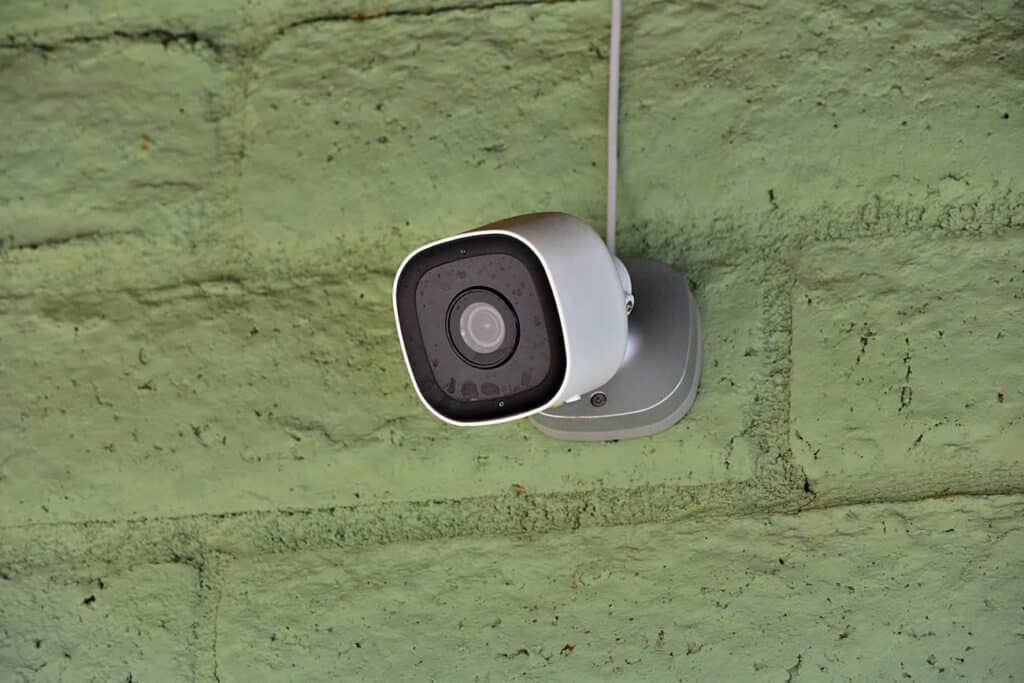
If you’re researching modern CCTV systems, you may have come across the term Power Over Coax (PoC). In simple terms, PoC CCTV is a technology that allows both power and video to travel through a single coaxial cable, removing the need for a separate power supply at the camera.
This approach has become increasingly popular across the UK, particularly for upgrades where older coax cabling is already installed. Instead of running new power cables or switching to full IP systems, PoC allows installers to reuse existing infrastructure while still delivering high-definition surveillance.
At We Fit Home Tech, we regularly install and upgrade CCTV systems in homes and commercial properties across the UK. In this guide, we’ll explain exactly how PoC works, when it’s the right choice, and how it compares with newer technologies like PoE. Whether you’re a homeowner, landlord or business owner, this article will help you decide if Power Over Coax CCTV is right for your setup.
Quick definition: Power Over Coax (PoC) CCTV is a system in which both electrical power and video signals are transmitted through a single coaxial cable between the DVR and the camera.
How Power Over Coax Actually Works
To understand PoC properly, it helps to look at what happens inside the system. Traditional analogue CCTV required two separate connections at each camera: one coax cable for video and one power cable from a local supply. PoC removes that second cable entirely.
In a PoC setup, the compatible DVR sends low-voltage DC power down the coax cable to the camera. At the same time, the camera sends the video signal back along that very same cable. Special circuitry inside both the DVR and camera separates the power and video signals so they do not interfere with each other.
The process typically works like this:
- The PoC-enabled DVR outputs power onto the coax line.
- The power travels along the RG59 or WF100 cable.
- The PoC camera receives this power and switches on.
- The camera sends HD video back through the same cable.
Because both signals share one cable, installation becomes much simpler. However, compatibility is critical. Both the DVR and the cameras must support PoC — mixing standard analogue equipment with PoC hardware will not work.
Cable quality also plays a major role. In the UK, double-screened coax such as WF100 or solid copper RG59 is strongly recommended. Poor-quality cable can lead to voltage drop, signal loss or unstable camera performance, particularly over longer runs.
Key Benefits of PoC CCTV Systems
Power Over Coax offers several practical advantages, especially in retrofit situations. This is one of the main reasons it has gained traction across UK residential and small commercial installs.
The most obvious benefit is the single-cable approach. With only one cable to run, installation is quicker and far less disruptive. This is particularly valuable in properties where access is limited or walls are already finished.
Major benefits include:
- Single cable installation reduces labour time and complexity.
• No local power supply required at the camera position.
• Ideal for upgrading older analogue CCTV systems.
• Cleaner, neater cable runs around the property.
• Lower installation costs compared with full rewiring.
From an installer’s perspective, PoC is often the fastest way to modernise an older coax-based CCTV system. For homeowners, it means less mess and usually a lower overall bill.
PoC vs PoE CCTV — Critical Differences
One of the most common questions we hear is how PoC compares with Power Over Ethernet (PoE). While both technologies deliver power and data through a single cable, they are designed for very different types of systems.
Power Over Coax (PoC)
PoC uses traditional coaxial cable, typically RG59 or WF100. It is mainly used with HD analogue CCTV formats such as TVI, CVI or AHD. Because it works over coax, it is particularly well-suited to upgrades where existing cabling is already in place.
Key characteristics:
- Uses coax cable
- Works with HD analogue cameras
- Does not require network infrastructure
- Excellent for retrofit upgrades
- Generally simpler for small systems
Power Over Ethernet (PoE)
PoE uses Cat5e or Cat6 network cable and is designed for IP camera systems. It delivers both data and power through standard network switches or PoE injectors. PoE systems offer greater scalability and advanced features, but usually require new cabling in older properties.
Key characteristics:
- Uses ethernet cable
- Designed for IP cameras
- Network-based system
- Highly scalable
- Better suited to new builds
In simple terms: PoC is often best for upgrading existing coax systems, while PoE is usually preferred for brand-new network-based CCTV installations.
When Should You Use PoC CCTV in the UK?
PoC is not always the right solution, but in certain scenarios, it is extremely effective. Across the UK, we most often recommend PoC in the following situations.
It works particularly well when a property already has coax cabling installed. Many homes and small businesses fitted with older analogue CCTV can be upgraded to HD PoC cameras without the cost of running new power lines.
PoC is also useful in commercial retrofit projects where downtime must be minimised. Shops, offices and warehouses often benefit from the faster installation process.
Typical use cases include:
- Upgrading legacy analogue CCTV systems.
- Properties with existing coax in walls.
- Small commercial premises needing quick upgrades.
- Budget-conscious installations.
- Situations where running new power cables is difficult.
For brand-new builds with no existing cabling, PoE IP systems are often considered instead. However, every property is different, which is why a proper site assessment is always recommended.
Limitations and Drawbacks of PoC
While PoC is very useful, it is not perfect. Any balanced installer should highlight the limitations so you can make an informed decision.
One of the main constraints is distance. Although PoC can run over fairly long coax lengths, voltage drop becomes a factor on extended runs. Poor-quality cable makes this worse.
Compatibility is another key consideration. Not all DVRs support PoC, and mixing equipment incorrectly is one of the most common causes of system failure.
Other limitations include:
- Less flexible than full IP systems.
- Resolution options depend on the analogue format.
- Expansion can be more limited than network CCTV.
- Requires good quality coax for best performance.
- Not ideal for very large multi-site systems.
For many homes and small businesses, these drawbacks are minor, but for larger or highly scalable systems, PoE may be the better long-term choice.
Typical Cable Types Used for PoC Systems
Cable quality is critical in any PoC installation. In the UK, the most commonly used cables include RG59 and WF100.
RG59 has traditionally been the standard for CCTV work. When using solid copper versions with proper screening, it performs well for most residential runs.
WF100, widely used in aerial and satellite installations, is also an excellent choice. Its double-screened construction provides strong protection against interference and signal loss.
Some installers also use shotgun coax, which combines video and power cores. However, with true PoC systems, the separate power core is not required because power travels through the coax itself.
The key takeaway is simple: always use high-quality, solid copper coax. Cheap copper-clad cable is one of the fastest ways to create problems in a PoC system.
Common Installation Mistakes to Avoid
We often see PoC systems that fail not because of the technology itself, but because of avoidable installation mistakes.
The most frequent issue is mixing PoC cameras with non-PoC DVRs. The system will simply not power up correctly. Another common problem is using poor-quality connectors or badly terminated BNC plugs, which can introduce signal instability.
Watch out for these mistakes:
- Mixing incompatible PoC and standard equipment.
- Using low-grade coax cable.
- Running cable beyond recommended distances.
- Poorly fitted BNC connectors.
- Assuming all analogue cameras support PoC.
Getting these basics right makes a huge difference to long-term reliability.
Professional Installation vs DIY
Some homeowners attempt DIY CCTV installs, and in simple cases, this can work. However, PoC systems still benefit from proper testing and setup.
DIY installations often run into compatibility issues, incorrect cable choice or poor routing. Without proper signal meters, it can also be difficult to diagnose voltage drop or interference problems.
Professional installers bring experience, the right tooling, and system-matching knowledge. They can also ensure cable runs are neat, weatherproof and properly labelled for future maintenance.
For many property owners, professional installation provides peace of mind that the system will work reliably from day one.
Is PoC CCTV Right for Your Property?
PoC is an excellent solution in many situations, but not all. It tends to work best in standard homes, small retail units and offices where existing coax infrastructure can be reused.
If you are upgrading an older CCTV system and want HD quality without major rewiring, PoC is often the most cost-effective route. If you are building a brand-new smart property with extensive networking, PoE IP cameras may be more suitable.
Every property is different, which is why a proper survey is always recommended before choosing your system type.
Frequently Asked Questions
Is PoC better than PoE?
Neither is universally better — they serve different purposes. PoC is usually better for upgrading existing coax systems, while PoE is typically preferred for new network-based installations.
How far can PoC run over coax?
This depends on cable quality and camera power draw. Many systems comfortably run over 200 metres with good RG59 or WF100, but performance can drop on longer runs or with poor-quality cable.
Do all DVRs support PoC?
No. Only PoC-compatible DVRs can send power down the coax. Always check system compatibility before purchasing equipment.
Can I upgrade my old CCTV to PoC?
In many cases, yes. If your property already has good-quality coax installed, upgrading to a PoC HD system is often straightforward.
What cable is best for PoC in the UK?
Solid copper RG59 or WF100 is strongly recommended. Avoid copper-clad steel cable, which can cause voltage drop issues.
Does PoC support 4MP or 8MP cameras?
Many modern PoC systems support HD resolutions, including 4MP and sometimes higher, depending on the manufacturer and format used.
Is PoC good for home CCTV?
Yes. For many UK homes, especially those with existing coax wiring, PoC provides a reliable and cost-effective upgrade path.
Our Final Say!
Power Over Coax CCTV offers a smart and efficient way to deliver both power and video through a single cable. For UK homeowners and businesses upgrading older analogue systems, it can dramatically reduce installation time, cost and disruption.
While PoE and full IP systems have their place, PoC remains a highly practical solution where coax infrastructure already exists. The key is choosing compatible equipment, using high-quality cable and ensuring the system is installed correctly.
If you are considering upgrading your CCTV or want expert advice on the best solution for your property, We Fit Home Tech can help you assess whether PoC or PoE is the right path for your setup.
Cctv Systems Knaresborough – Wifi Services Harrogate – Wifi Services Barnoldswick